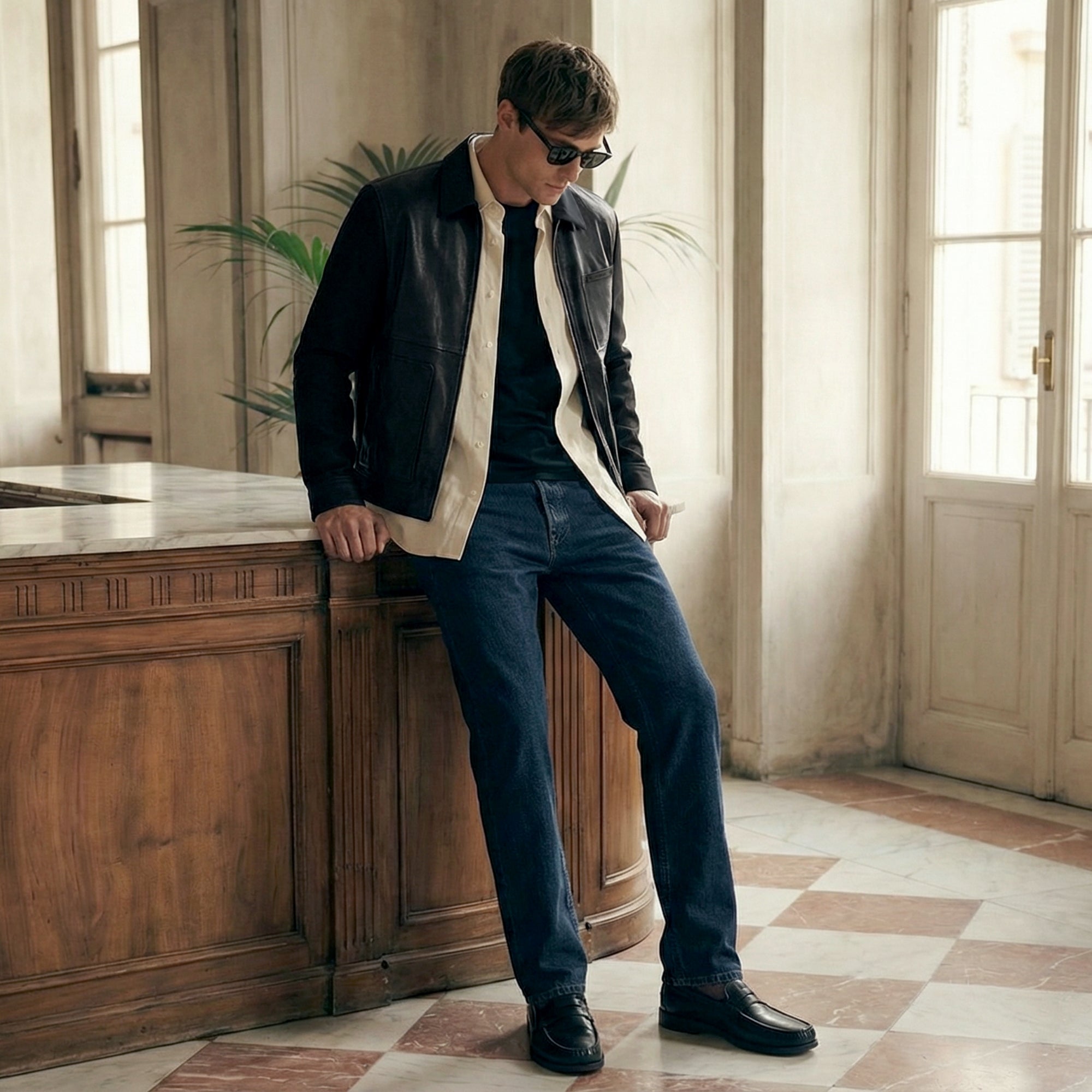
Why a Premium Leather Jacket Is a 30-Year Investment
A well-crafted full-grain leather jacket outlasts ten or more fast-fashion alternatives. When you break down the cost per wear over a decade, or three, the math is simple: premium wins. Not a seasonal trend piece, it is a living garment that develops patina, character, and a story that belongs only to you.
The numbers back this up. The global leather jacket market sits at $37.23 billion in 2025 and is projected to reach $46.28 billion by 2030. Premium leather goods are growing at a 7.31% CAGR through 2031, outpacing mass-market alternatives by a wide margin. The demand is real, and it is accelerating.
With over 30 years of leather craftsmanship expertise, we built this guide to arm you with the exact knowledge to make one right decision instead of three wrong ones.
Decoding Leather Grades: What the Label Is Not Telling You
Here is the uncomfortable truth: the words "genuine leather" on a label are not a quality endorsement. They are, in fact, a marker of the lowest real-leather grade, made from inner hide layers with significantly less durability. Most buyers never learn this, and mass-market brands count on that ignorance.
The full hierarchy, from best to worst:
- Full-grain leather: The outermost layer of the hide, with no sanding or buffing. This is the gold standard. It is the most durable, the most breathable, and the only grade that develops a rich, personal patina over years of wear.
- Top-grain leather: Lightly sanded to create a smoother, more uniform surface. It resists stains well but sacrifices some breathability. It will not age with the same depth as full-grain.
- Genuine leather: Real leather, yes. But it is a lower-grade cut from inner layers of the hide, significantly less durable. Often found in jackets marketed as "premium" at suspiciously low price points.
- Bonded leather: Leftover leather fibers mixed with polyurethane or latex and pressed into sheets. Avoid this entirely for any serious purchase.
Beyond the grade itself, tanning method is a secondary quality signal worth understanding. Chrome-tanned leather is softer, more flexible, and water-resistant, making it the standard in fashion jackets. Vegetable-tanned leather is firmer, more eco-friendly, and develops a deeper, richer patina over time. It takes longer to produce and costs more, but the results speak for themselves.
Sourcing matters too. Prada acquired a stake in Italian leather group Rino Mastrotto in June 2025, a clear signal that luxury brands are locking down premium material supply chains. With 60% of consumers now preferring eco-friendly leather products, responsibly sourced full-grain and vegetable-tanned options are the credible choices. Anything less is a compromise.
The Fit Framework: How to Try On a Leather Jacket Like an Expert
Forget everything else for a moment. The single most critical rule: shoulder seams must align exactly with the natural edge of your shoulder. Leather stretches slightly over time, but it will never correct a poor shoulder fit. Get this wrong, and the jacket will never look right.
With that settled, here is your checklist:
- Chest and torso: When zipped or buttoned, you should be able to slide two fingers flat against your chest. Snug, not restrictive.
- Sleeve length: Cuffs should hit the wrist bone, allowing a slight reveal of a shirt cuff underneath.
- Body length: Biker and café racer styles sit at the hip. Bombers can run slightly longer. Know the silhouette you are buying before you try it on.
- Mobility check: Raise both arms above your head. The jacket should lift slightly but never restrict movement at the shoulders.
Premium full-grain leather molds to your body over two to four weeks of regular wear, softening at flex points and conforming to your frame. Size for your current body, not the broken-in version you are imagining.
One note on the current moment: oversized bombers and relaxed shoulders are dominating runways for 2025 and 2026. If you are buying into that silhouette intentionally, a deliberate size-up is valid. Even with a relaxed fit, the shoulder seam rule still applies as your anchor point.
Style Decoded: Choosing the Right Silhouette for Your Life
The Biker: Asymmetrical front zip, wide lapels, structured shoulders, cropped and snug. Best executed in cowhide or heavyweight lambskin for durability and edge. This jacket suits a confident, urban, rebellious aesthetic. It is a statement, not a suggestion.
The Bomber: Relaxed fit, ribbed cuffs and hem, endlessly versatile. Best in top-grain or supple lambskin. If this is your first leather jacket, start here. It moves between casual and smart-casual contexts without effort.
The Café Racer: Center zip, stand-up collar, minimal hardware, clean modern lines. Best in smooth lambskin or top-grain. This is the jacket for the quiet luxury aesthetic, refined without announcing itself.
The Leather Blazer: The breakout silhouette of 2025 and 2026. Structured like tailoring, worn over trousers or denim with equal conviction. Best in top-grain for drape and polish.
Matching Grade to Style
Lambskin for café racers and blazers, where drape and softness matter most. Cowhide for bikers, where structure and durability define the look. Mid-weight top-grain for bombers, balancing both qualities.
First jacket vs. second jacket: If you are buying your first premium leather jacket, prioritize versatility. A bomber or café racer in black or dark brown will serve you for years. Once you have that foundation, your second jacket is where you go bold: a full-grain biker with signature hardware, or a leather blazer that redefines your wardrobe.
Care, Conditioning, and Making It Last Decades
Full-grain leather: Condition every four to six months with a quality leather conditioner. Non-negotiable. It keeps the hide supple and prevents cracking over time.
Top-grain leather: Apply a protective spray to maintain its surface coating. Reapply after any heavy rain exposure.
The drying rule: Always air-dry naturally. Never use a radiator, hair dryer, or any direct heat source. Heat cracks and dries out the hide permanently.
Rain recovery: If your jacket gets soaked, blot gently with a clean cloth, reshape it, and lay it flat to air-dry away from sunlight. Condition once it is fully dry.
Storage: Hang on a wide, padded hanger to preserve the shoulder shape. Store in a breathable garment bag, never plastic, which traps moisture and invites mildew.
Here is the part most people miss: full-grain leather improves with age. Scratches, creases, and subtle fading become part of the jacket's identity. That patina is not damage. It is proof of a life lived in something worth wearing.
Seasonal rotation tip: Lighter lambskin for fall transitions, heavier cowhide or shearling-lined styles for winter. Proper storage between seasons extends jacket life significantly.
How to Buy with Confidence: What Separates a Premium Jacket from a Pretender
Check the label: Look for "full-grain" or "top-grain" specifically. If it says only "genuine leather," treat it as a red flag regardless of the price tag.
Hardware: Zippers should glide without snagging. YKK or branded hardware signals that a brand cares about the details you cannot see in a photo.
Stitching: Even, tight stitching at stress points, including cuffs, collar, and pocket edges, indicates quality construction. Loose or uneven stitching is a dealbreaker, full stop.
Provenance: Brands with documented craftsmanship heritage, named tanneries, or responsible sourcing credentials are more trustworthy than anonymous labels. RUDSAK has been designing in Montreal since 1994, with over 30 years of leather expertise, a sustainable Heritage Collection, and temperature-rated outerwear built for real conditions. That kind of transparency is what separates a premium brand from a marketing exercise.
Price benchmarking: Full-grain leather jackets from credible brands typically start at $500 to $800 and rise well above $1,000 for artisanal construction. Anything marketed as "premium full-grain" under $200 warrants serious scrutiny.
The smell and texture test: Genuine full-grain leather has a distinct, natural smell and slight surface variation. A uniform, plastic-like texture or chemical odor suggests bonded or synthetic materials.
Your Next Leather Jacket Starts Here
The framework is straightforward: grade first, full-grain or top-grain; fit second, shoulder seam is king; style third, match the silhouette to your life and your aesthetic.
A premium leather jacket is not an impulse buy. It is a deliberate, identity-defining investment that rewards patience and knowledge. The right one will outlast trends, outlast seasons, and only get better with time.
RUDSAK's men's leather jacket collection has been designed in Montreal since 1994, built on over three decades of craftsmanship for those who wear their identity on the outside. For buyers committed to premium outerwear for the long term, the RUDSAK ÉLITE loyalty program adds exclusive perks that make the investment even sharper.
Know the grade. Trust the fit. Own the jacket.